Exhibitors
Learn more about our 2026 exhibitors below!
Amusy Entertainment
Amusy Entertainment specializes in Japanese claw machines and operates vending locations in malls, restaurants, and retail stores across the Pacific Northwest. We also began participating in community events in 2024 featuring our “play until you win” experience, designed so every guest can enjoy the excitement of winning a prize. All prizes are carefully imported from Japan and include a wide selection of officially branded/licensed products from trusted brands such as YELL, SK Japan, Bandai, & Furyu. At the Festival, we will sell tokens for play, and each machine will be set to our guaranteed win style, creating a fun, friendly, and memorable entertainment experience for all ages.
Location: Armory Food Court
Asato Bingata Studio
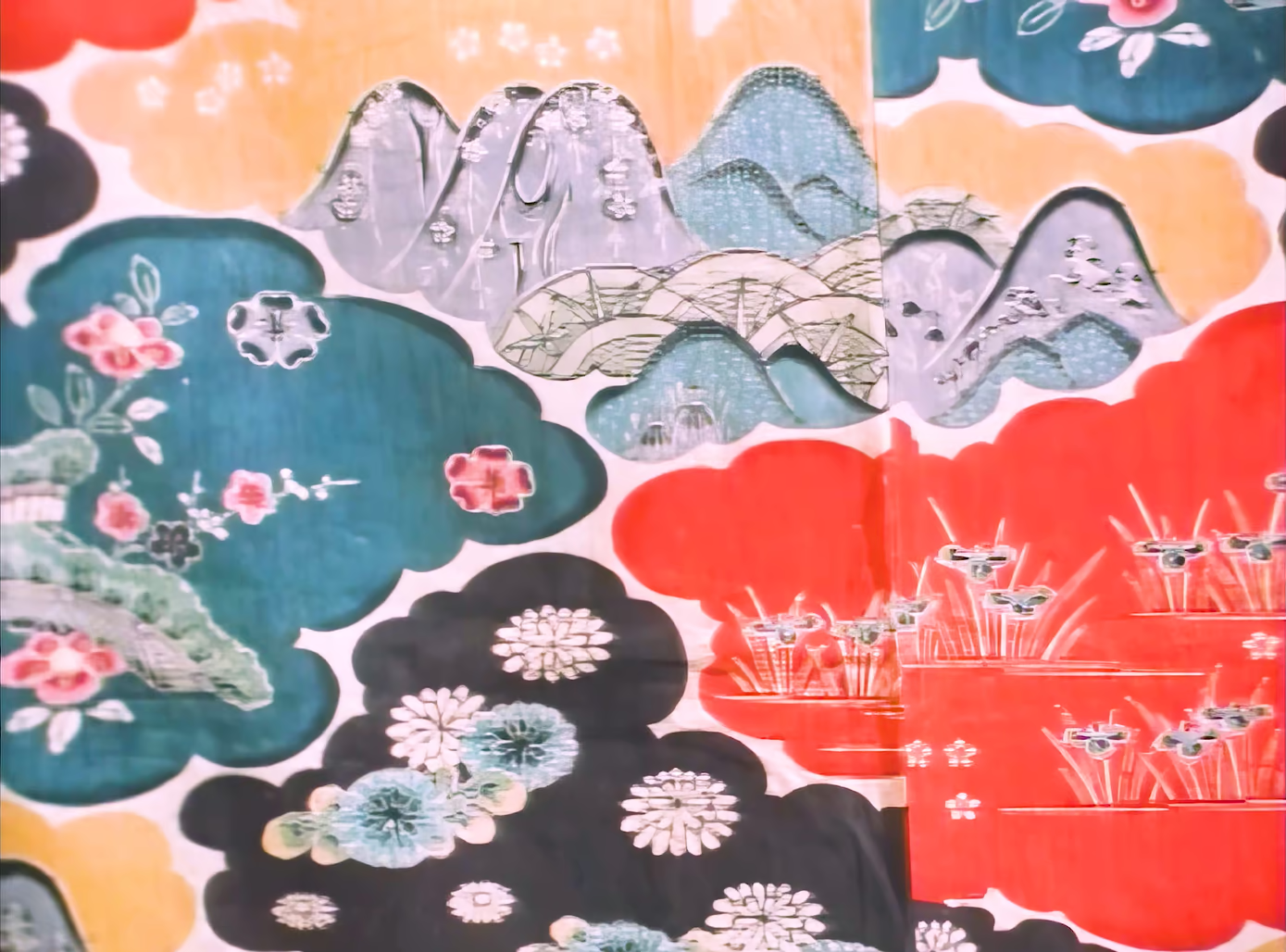
Asato Bingata Studio, located in Ginowan City, Okinawa was founded in 1982 and is run by Kazuo Asato and his son, Masatoshi. Bingata is a traditional Okinawan stenciled resist dyeing technique which dates back to the Ryukyu Kingdom (1429 – 1872). Bingata typically features a busy pattern of repeating nature motifs such as animals, fish, flowers and fauna using bright colors. Clothing featuring a Bingata design is worn during traditional Ryukyuan festivals and traditional arts performances. All of the products from the studio are crafted from beginning to end by a single craftsman.
Kazuo and Masatoshi Asato will be hosting 4 workshops each day on Saturday, April 11 and Sunday, April 12.
Click here for more information & to register.
Location: Fisher Pavilion
Chiyogami Ningyo
Chiyogami is a Japanese paper (washi) which is printed by engraved wood. There are many designs such as flowers or blossoms for each season. The dolls also depict Kabuki plays, manners and customs from the Edo era (Edo is the old name for Tokyo). The exact origin is unknown but it is widely accepted that it may have begun in Samurai households in the mid-seventeenth century.
Usually, Chiogami dolls (Anesama Ningyo) would have no eyes, noses or mouths because the Kimono (clothing), Obi (sash or belt) and hair styles would be emphasized instead. During the Edo era (circa 1600-1875), there were clearly defined class distinctions reflected in women’s hair styles, the wearing of kimonos, and even in the tieing of the Obi. For example, samurai and ordinary citizens, married or single, young or old all had distinct styles.
Location: Armory Food Court
Consulate General of Japan in Seattle
The Consulate-General of Japan in Seattle assists Japanese nationals living in Washington, Montana, and Northern Idaho and works together with local communities to promote Japanese culture and facilitate a variety of exchanges. As the official representative of the Government of Japan in this region, the Consulate strives to strengthen bonds of mutual friendship and understanding between Japan and its neighbors in the Northwest.
Location: Fisher Pavilion
Equitable Advisors
Location: Armory Food Court
Haiku Northwest
Haiku Northwest is one of the premier haiku organizations in the Pacific Northwest and America. Based in Seattle/Bellevue and founded in 1988 by Francine Porad, Haiku Northwest is a group of active poets that love to share and discuss haiku and related forms of poetry, We host monthly meetings, quarterly field trips, and gather for our annual Seabeck Haiku Getaway in October. The Seabeck event is one of the most important immersive haiku festivals in North America. We would love to have you stop by and create a memory, especially if you’re new to haiku!
Location: Armory Loft
Hokkaido Association of North America
The mission of the Hokkaido Association of North America is to promote the conservation and development of the Hokkaido Inu (a breed of dog) in North America and protect the welfare of the breed for future generations. The Hokkaido Ken Film Project is producing a documentary film to aid these efforts and increase awareness of and interest in the Hokkaido Inu worldwide.
Location: Fisher Pavilion
Hyogo Business & Cultural Center
Hyogo Business & Cultural Center (HBCC) is an overseas office based in Seattle, Washington, representing Hyogo Prefecture in its sister-state relationship with Washington State. Its mission is to promote collaboration in business, tourism, and education across the United States. At the festival, we will share information about Hyogo and invite you to visit us for tourism pamphlets!
Location: Fisher Pavilion
JACL Seattle Chapter
The Seattle Chapter of the Japanese American Citizens League (JACL) will have an exhibit sharing our Chapter history and “know your rights” information for visitors.
Location: Armory Food Court
Japan Business Association of Seattle
Location: Fisher Pavilion
Japan-America Society of the State of Washington
JASSW is a registered 501(c)(3) nonprofit organization that brings together a diverse membership of individuals, companies, and organizations from across Washington State and Japan. We pursue our mission through dynamic business, cultural, and educational programs that foster meaningful cross-cultural understanding.

Japanese Cultural & Community Center of Washington
The Japanese Cultural & Community Center of Washington (JCCCW) is dedicated to sharing and promoting Japanese and Japanese American culture. It hosts public events, such as Kodomo no Hi (Children’s Day) and Bunka no Hi (Culture Day), each year. Northwest Nikkei Museum, a program of the JCCCW, is available to visit during regular business hours, and focuses on the preservation of objects related to local Japanese American history. The community center is also home to the oldest operating Japanese Language School in the continental United States, with a Saturday in-person youth program and online classes for adults.
This year, our booth will offer a cherry blossom uchiwa fan making activity and Language School teachers will also help visitors create their own name tag in Japanese!

Kagoshima Kenjin Kai
Keiro Northwest
Keiro Northwest is a nonprofit organization in the International District of Seattle, Washington with the mission of serving Japanese elders. From our founding in 1975 to today, Keiro Northwest has evolved to meet the changing needs of our Japanese American elder community, always guided by our values of family, quality of life, and kimochi.
Location: Armory Food Court
Kubota Garden Foundation
Kubota Garden is a free 20-acre Japanese garden in Southeast Seattle, founded in 1927 by Japanese immigrant and landscape designer Fujitaro Kubota. Renowned for blending Japanese design with Pacific Northwest horticulture, the Garden reflects a rich cultural legacy. Kubota Garden Foundation (KGF) is a nonprofit steward dedicated to preserving this legacy while keeping the Garden a welcoming place of beauty and reflection for all. In partnership with Seattle Parks, KGF supports the Garden through education, cultural programming, and volunteer leadership. Visit KGF’s booth to learn about community events and volunteer opportunities planned for 2026!
Location: Fisher Pavilion

Meito Shodo Kai Calligraphy Association
Shodo (Japanese calligraphy) is an art form in which the brush creates living art utilizing the balance between lines and space. Meito Shodo Kai Calligraphy Association aims to promote this traditional Japanese art form in the United States through education and exhibition.
Location: Armory Loft
North American Post
Publisher of Soy Source and North American Post newspapers focused on the Japanese and Japanese American communities. We will have newspapers to distribute and games/activities for families and children.
Location: Armory Food Court
PAPER – Puget Area Paperfolding Enthusiasts Roundtable
Origami P.A.P.E.R. (Puget Area Paperfolding Enthusiasts Roundtable) was started several years ago by a group formed through the Internet, as an e-mail discussion group centered around origami.
PAPER is a local origami group that meets on a monthly basis to share the joy of paper folding. They have been meeting for about two decades, and are an affiliated group of OrigamiUSA, the national paper folding organization. The interests in their group vary from complex folds to money folds to modulars to crane variations. They have members who like to create and develop new folds. Some of the members have had their works exhibited on local and national levels and at OrigamiUSA national conventions. Origami, in practice, is about sharing. This is reflected in PAPER meetings. The focus of the get-togethers is to to show each other new folds, books, and models.
Location: Fisher Pavilion

Rainier Ginsha Haiku Club
Rainier Ginsha is a haiku group established in Seattle in 1934 and continues its activities to this day. Haiku is a traditional Japanese art form that expresses nature, the seasons, daily life, and emotions in a concise poetic style. Rainier Ginsha follows the haiku principles of Kyoshi Takahama (Hototogisu Haiku), and members’ works are regularly reviewed and critiqued in Japan.
At this year’s Festival, our booth will introduce Rainier Ginsha’s activities and promote the appreciation of haiku through displays and informational materials. We will also share information about our monthly haiku gatherings and other ongoing cultural activities.
Location: Fisher Pavilion (Friday & Saturday only)
Seattle Abacus School
Seattle Abacus School is an educational organization dedicated to teaching Japanese abacus (soroban) and mental math to children. At this year’s Festival, we will offer a hands-on “Make Your Own Abacus” activity, where children can create their own mini abacus while learning how numbers are represented visually. This interactive experience introduces the beauty of Japanese learning culture through play, creativity, and math. A materials fee will be collected for participation.
Location: Armory Food Court
Seattle Flying Dragon Boat Club
The Seattle Flying Dragon Boat Club is a 501(c)(3) nonprofit organization that promotes the culture of dragon boat paddling. This 2000-year-old Chinese traditional is now an international team sport that encompasses the elements of power, speed, synchronization, and endurance. We paddle year-round on Lake Union in Seattle and the Sammamish River in Kenmore. The Seattle Flying Dragons hosts the annual Seattle Dragon Boat Festival that will take place on Saturday, June 13, 2026, at Lake Union Park. We will share more details about this sport and the festival through conversation, poster displays, and an interactive memory game.
Location: Armory Food Court
Seattle Fukushima Kenjinkai
The Seattle Fukushima Kenjinkai is an organization dedicated to spreading awareness about the Fukushima prefecture and providing education regarding its history and culture and preserving its traditions for future generations.
Location: Fisher Pavilion
Seattle Go Center
The Seattle Go Center teaches and promotes the Asian game of Go. This 4000 year old strategy board game continues to fascinate players around the world. We have a mission to spread peace through the game of Go and aim to spread it through out the area.
Location: Armory Loft

Seattle Hiroshima Club
Location: Fisher Pavilion
Seattle Japanese Garden
Open to the public since June 1960, Seattle Japanese Garden, located in the Washington Park Arboretum, is one of the most highly regarded Japanese-style gardens in North America. Our booth will have information about the garden as well as upcoming events and volunteer opportunities.
Location: Fisher Pavilion
Seattle Kishu Club
Location: Fisher Pavilion
Seattle Miyazaki Kenjinkai
Location: Fisher Pavilion
Seattle-Kobe Sister City Association (SKSCA)
The SKSCA is a volunteer-based 501(c)3 nonprofit association that helps promote and facilitate friendly relations between Seattle and our sister city of Kobe, Japan. We welcome anyone with an interest in Japan to check out our activities, and you’ll find our members have many ties in Kobe and the surrounding Kansai region.
This year, we will once again offer guests the chance to dress up in a selection of kimono and yukata and take photographs.
Seattle-Tacoma Fukuoka Kenjinkai
We are Japanese American community club with many of our members who have close relationships with Fukuoka Prefecture.
We will offer a “Kanji Writing Workshop” at our booth during the Festival.
Shannon & Jason
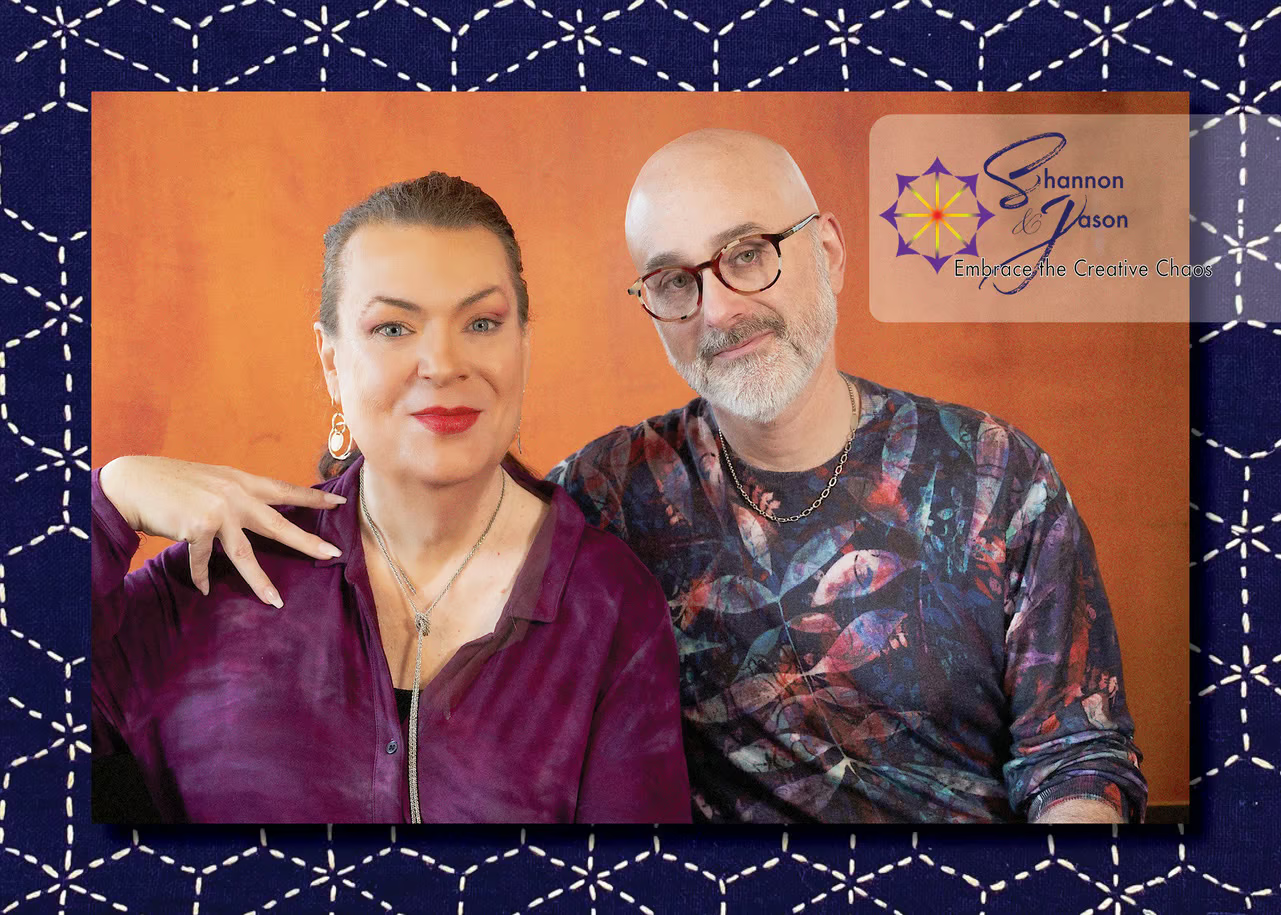
Shannon & Jason are textile artists, authors, and educators dedicated to the heritage techniques of sashiko and boro. Honoring the philosophy of mottainai (waste-consciousness), their booth will feature live demonstrations of traditional mending and decorative stitching. Visitors can explore a vibrant display of hand-stitched quilts, kimono, and hanten that blend historical craftsmanship with modern application. Their booth will offer a curated selection of sashiko kits, signed books, and handcrafted items including scarves, coasters, and textile art. They invite you to experience the “creative chaos” of making and the sustainable beauty of bridging cultures through the timeless language of needle and thread.
Textures by Jan
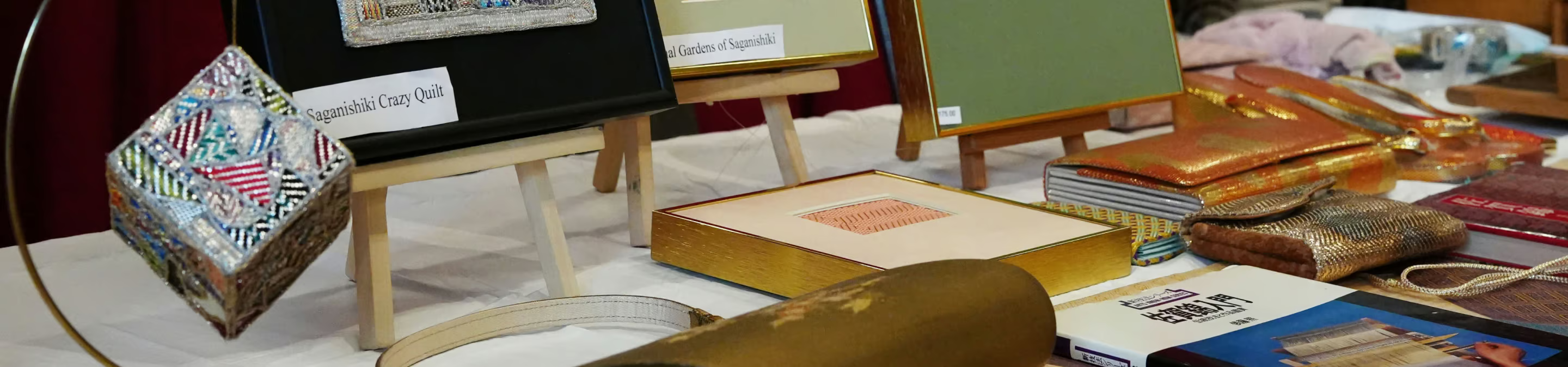
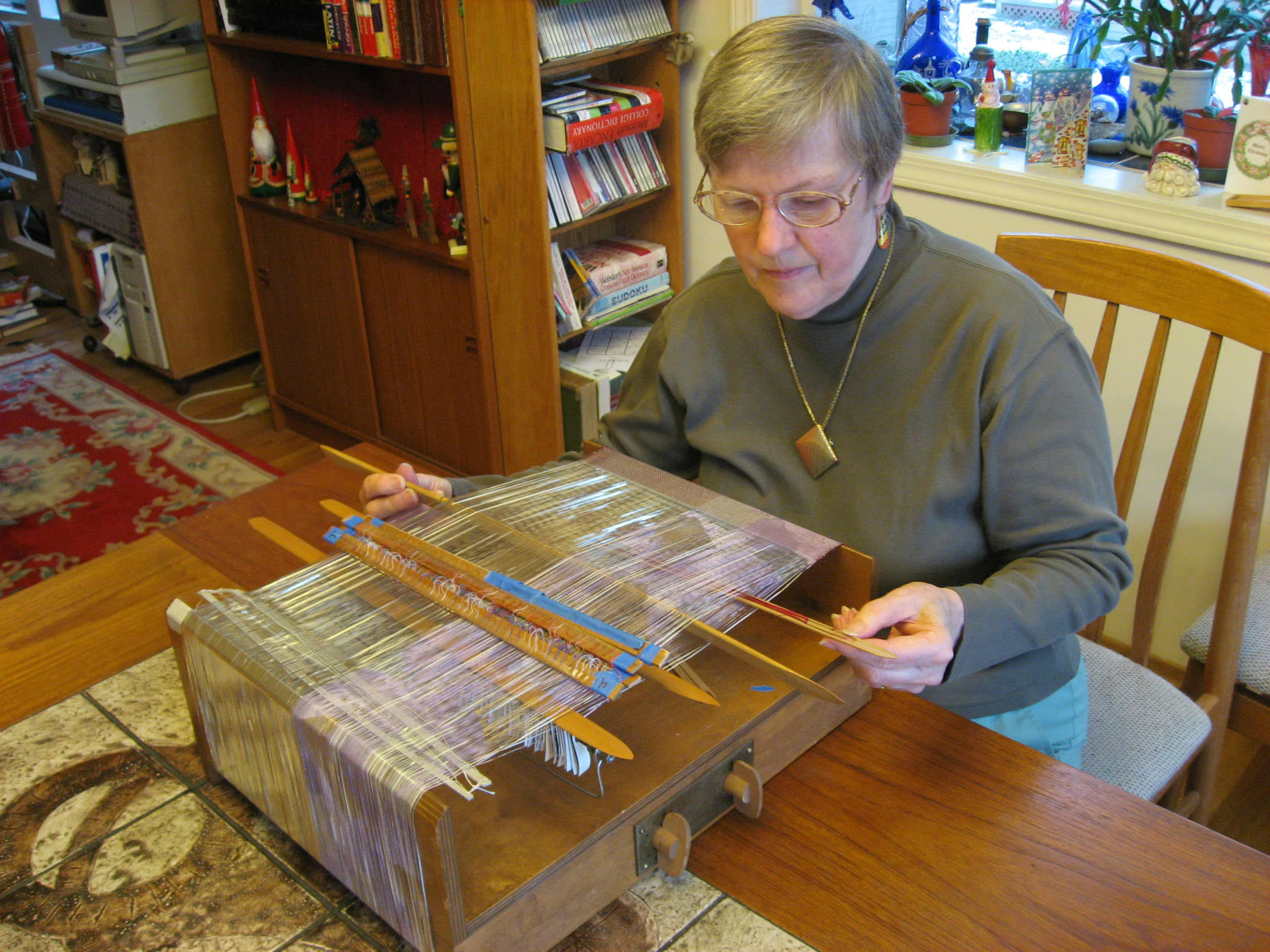
Jan will be demonstrating the art of Saganishiki (Japanese gold brocade) and pieces of jewelry will be for sale. Saganishiki is the most recent of the Japanese National Arts and involves weaving on finely slit metallized paper with silk.
Tsuru for Solidarity
Tsuru for Solidarity is a nonviolent, direct action project of Japanese American social justice advocates and allies working to end detention sites and support directly impacted immigrant and refugee communities that are being targeted by racist, inhumane immigration policies. We stand on the moral authority of Japanese Americans who suffered the atrocities and legacy of U.S. concentration camps during WWII and we say, “Stop Repeating History!”
Never Again is NOW. Our mission is to:
- educate, advocate, and protest to close all U.S. concentration camps;
- build solidarity with other communities of color that have experienced forced removal, detention, deportation, separation of families, and other forms of racial and state violence;
- coordinate inter-generational, cross-community healing circles addressing the trauma of our shared histories.
Location: Armory Food Court (Sunday only)